
Views: 0 Author: Guangdong Rolansini Home Furnishing Technology Co., Ltd. Publish Time: 2025-05-13 Origin: https://www.rolansini-windows.com/


When evaluating energy-efficient building designs, windows and doors are often the first line of defense against unwanted heat gain and loss. However, many homeowners and architects focus primarily on frame materials, overlooking the most crucial component: the glass itself.
Glass accounts for up to 80% of a window or door system's total surface area. Consequently, high-performance glass technology is the #1 factor driving thermal efficiency, cutting energy bills, and reducing carbon footprints in modern architecture.
In this comprehensive guide, we decode how heat transfer works in windows, how advanced glazing acts as a thermal shield, and how integrated engineering strategies deliver maximum insulation.

To appreciate how advanced glazing works, it helps to understand how heat moves through a standard window system. Heat transfer occurs through three primary mechanisms:
Radiation (Radiant Heat): Solar energy in the form of shortwave infrared radiation penetrates standard clear glass, directly heating interior floors, furniture, and air.
Conduction (Direct Contact): Thermal energy moves directly through solid materials. Touch a sunbaked windowpane in July, and you immediately feel conductive heat transfer.
Convection (Air Movement): Temperature differences create airflow. When hot external air enters through microscopic window gaps—or when warm indoor air circulates against a cold glass panel—convective heat loss or gain occurs.
The Result: Uninsulated or single-pane glass forces HVAC systems to work overtime, leading to soaring utility bills and accelerated mechanical wear.
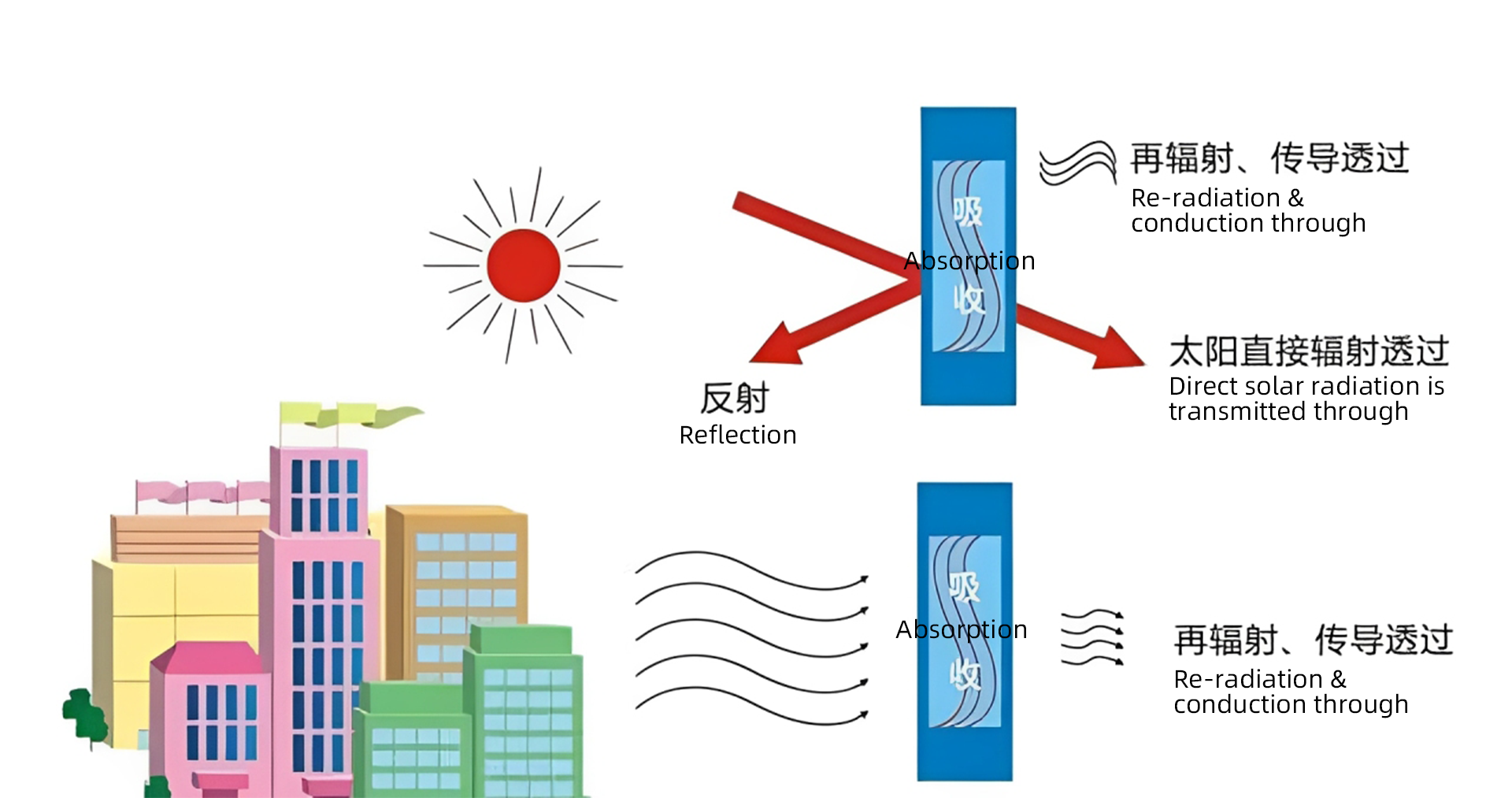
Modern high-efficiency architectural glass acts as a invisible thermal barrier that dynamically controls solar energy:
Winter Thermal Retention: Reduces interior heat loss by over 30%, keeping living spaces comfortable without straining heating systems.
Summer Solar Heat Rejection: Blocks more than 50% of external solar heat gain, dramatically lowering indoor temperatures and cooling demand.
Environmental Impact: Directly reduces household and commercial HVAC energy consumption, contributing to lower CO₂ emissions and sustainable building standards like LEED or Passive House.

To meet the demands of diverse climate zones, Rolansini engineers specialized glazing solutions that maximize energy performance and structural durability:
Standard window glass has an emissivity rating of approximately 0.84, meaning it absorbs and radiates a high percentage of heat. Rolansini’s Low-E glass features a microscopic, metal-oxide coating that brings emissivity down to a staggering 0.02.
Key Benefit: Reflects over 90% of far-infrared heat back to its source—keeping solar heat outside in the summer and trapping radiant heat inside during the winter.
By combining three layers of premium glass separated by two hermetically sealed air or argon gas cavities, this system achieves an ultra-low U-value of 0.6 W/m²·K.
Key Benefit: Outperforms standard double-pane glazing by 40%, significantly enhancing both thermal insulation and acoustic soundproofing.
Engineered for extreme environmental conditions, 4SG Hybrid Glass combines structural flexible warm-edge spacers, advanced vacuum seals, and dense noble gas fills (such as Argon or Krypton).
Key Benefit: Eliminates thermal bridging at the glass edge, prevents internal condensation, and delivers unrivaled long-term seal integrity in harsh hot or freezing climates.


While glass plays a starring role, a truly energy-efficient window requires a holistic approach to envelope engineering. A high-performance glass unit installed in an uninsulated frame creates a severe thermal bridge.
To achieve optimal energy efficiency, Rolansini utilizes a 3-Pillar System Design:
The Glass (The Core Shield): Advanced Low-E, triple-pane, or hybrid vacuum glazing systems tailored to climate needs.
Multi-Chamber Thermal Break Frames: High-strength aluminum profiles engineered with multi-cavity internal structures and high-density polyamide thermal break strips to interrupt conductive heat transfer through the metal.
6-Layer Continuous Weather Seals: Precision-engineered, weather-resistant EPDM gaskets that form an airtight seal across all frame joints, preventing drafts, wind-driven rain, and convective heat leakage.
"True thermal insulation isn't about one single component—it requires the glass, frame, and seal technology to work in perfect synchronization."

“True insulation needs all three working in sync.”
Whether you are designing a modern residential villa or upgrading a commercial facade, investing in high-efficiency window and door systems yields measurable, long-term returns.
Ready to lower your energy bills and elevate your architectural comfort? Discover [Rolansini's energy-efficient window and door collections] or contact our technical team today for customized thermal performance solutions!


