
Views: 0 Author: Site Editor Publish Time: 2026-09-22 Origin: Site


Australian homeowners face unique climatic pressures every single day. From intense coastal salt-spray to punishing inland thermal extremes, harsh weather tests our homes constantly. Selecting the wrong window profile leads directly to compromised energy efficiency and structural degradation. Many buyers overlook the importance of sealing mechanics and ventilation control during the design phase.
You need solutions built specifically for these demanding conditions. Today, outward opening casement windows offer superior ventilation and compression sealing compared to traditional sliding profiles. However, they require specific spatial and architectural conditions to function optimally. You cannot simply install them anywhere. This article provides a transparent, specification-driven framework. We will evaluate exactly where this window style succeeds, where it fails, and how to align it perfectly with Australian building standards.
Optimal Placement: Best suited for prevailing breeze capture in living areas and bedrooms, provided there is exterior clearance.
Energy Efficiency: A Thermal Break Casement Window is critical for mitigating Australia's high UV and thermal transfer rates.
Compliance: Verifying AS2047 Casement Window certification is a non-negotiable legal and performance baseline for wind and water resistance.
Limitation: Unsuitable for ground-floor installations facing narrow walkways or high-traffic exterior paths due to the outward swing radius.
Living rooms and bedrooms demand maximum airflow during warm Australian summers. You can capture parallel cross-breezes easily using an outward swinging sash. When fully extended, the glass pane acts as a literal wind scoop. It grabs air moving alongside the building facade and redirects it indoors.
To evaluate a room for this design, you must map the exterior clearance. Measure the outward swing radius carefully. You should map this swing against exterior landscaping features, deck furniture, and property boundary lines. If a window projects 600mm outwards, you need at least 1000mm of totally clear space outside to prevent physical collisions.
Best Practice: Always align the hinge side of your window toward the direction of your prevailing local breezes. This maximizes the wind-scooping effect significantly.
Despite excellent performance, implementation risks exist. You should avoid this style in specific spatial scenarios. The sash becomes a serious physical hazard in confined spaces.
Avoid outward swinging installations in these areas:
Ground-floor walls opening directly onto tight pedestrian pathways.
Alfresco dining areas where open windows might strike seated guests.
Zero-lot-line boundaries where the open sash protrudes into a neighbor's property.
High-rise apartments present another major constraint. Extreme wind loads at higher elevations easily damage open sashes. Body corporate regulations also frequently restrict facade alterations. Always check strata bylaws before specifying outward swinging styles for apartment renovations.
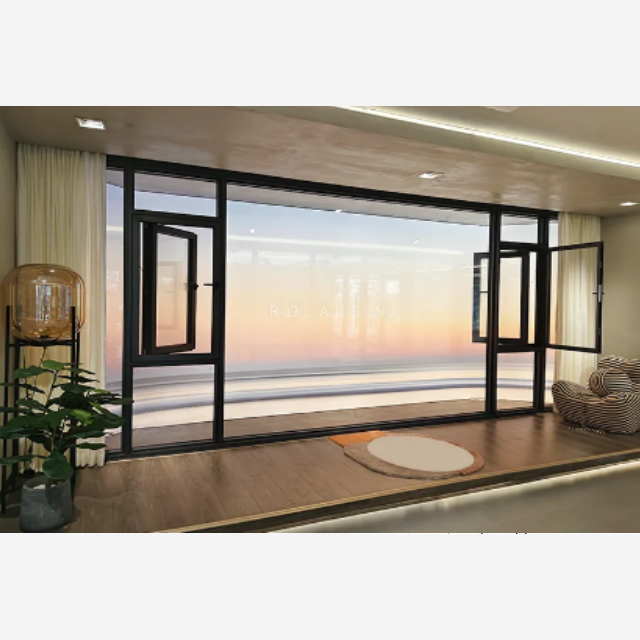
Material durability defines window lifespan in Australia. Timber requires constant resealing to prevent rot. Standard uPVC often degrades, warps, or discolors under our extreme UV index. An Aluminium Casement Window outlasts both alternatives easily. It provides exceptional structural rigidity, especially in bushfire-prone areas requiring high BAL (Bushfire Attack Level) ratings.
We must look skeptically at maintenance realities. Not all finishes perform equally. Standard powder-coating lifespans drop significantly in coastal zones. For properties within one kilometer of the ocean, you need coastal-grade anodizing or marine-grade powder coating (like Interpon D2525). This prevents salt-spray corrosion and blistering over the frame's lifespan.
Standard aluminium conducts heat rapidly. In a harsh summer, a basic metal frame becomes a radiator inside your home. We solve this technical challenge using a Thermal Break Casement Window.
The technical framework involves a polyamide plastic strip inserted between the interior and exterior aluminium profiles. This strip stops the conductive bridging of heat. The exterior frame gets hot, but the interior frame stays cool. This technology aligns perfectly with WERS (Window Energy Rating Scheme) standards. It drastically reduces your reliance on HVAC systems in summer and prevents indoor condensation during winter.
Common Mistake: Buyers often upgrade to expensive double glazing but forget to specify a thermal break frame. Double glazing placed inside a highly conductive standard aluminium frame loses much of its insulating value.
Building codes exist to protect your property and safety. AS2047 defines the mandatory performance baseline for all windows in Australian buildings. Relying on uncertified products exposes your home to severe structural failure and massive water damage.
An AS2047 Casement Window passes stringent laboratory evaluation metrics. The standard tests multiple failure points:
Deflection testing: Ensures the frame stays structurally sound under extreme wind pressure without bending beyond allowable limits.
Operating force: Verifies the hardware remains smooth and easy to open over time.
Air infiltration: Measures drafts through the closed window seals.
Water penetration resistance: Blasts the window using high-pressure water to ensure zero internal leaks during heavy rain.
Effective risk management requires matching your window to your site's specific wind classification. Australia uses an N-rating system (N1 for sheltered inland areas up to N6 for exposed coastal zones). Cyclonic regions use a specialized C-rating system (C1 to C4).
You must specify an Outward Opening Casement Window rated for your exact terrain category. A product designed for a sheltered N2 suburban block will fail catastrophically during an N5 coastal storm. Always ask your local builder or engineer for your site's specific wind rating before ordering.
Window Type Comparison Matrix
| Feature Category | Outward Casement | Sliding Window | Awning Window |
|---|---|---|---|
| Ventilation Area | 100% of opening | 50% of opening | Partial (bottom gap) |
| Seal Mechanism | Compression Seal | Friction Seal | Compression Seal |
| Rain Protection | Moderate (when open) | Poor (when open) | Excellent |
| Ideal Proportions | Narrow and Tall | Wide and Short | Wide and Short |
Sealing performance defines the primary difference here. Casements utilize advanced compression seals. When you lock the window, the multi-point hardware actively pulls the sash tight against the frame's rubber gaskets. This creates an airtight barrier. Sliding windows rely on loose friction seals (mohair strips) to allow movement. Therefore, casements offer vastly superior acoustic blocking and thermal insulation.
Ventilation capacity also sets them apart. A casement provides 100% opening area because the entire glass pane swings outward. A sliding window restricts you to a maximum 50% opening area, as one pane must always slide behind the other.
Airflow direction dictates which style you should choose. Casements direct horizontal breezes firmly inward. Awnings hinge at the top and push out at the bottom. They provide superior rain protection during a storm, but they block direct inward airflow significantly.
Size limitations affect your architectural design. Casements support narrower, taller vertical spans effortlessly. The hinge geometry favors vertical weight distribution. Awnings suit wider, horizontal openings much better.
The primary adoption risk for this window style involves insect screening. Traditional fixed exterior screens cannot be used because the glass needs to push outward. You must plan for internal screening solutions from day one.
We evaluate several solution categories for modern homes:
Interior retractable insect screens: These roll up into a discreet cassette at the top or side of the frame when not in use. They offer the cleanest visual aesthetic.
Magnetic screens: Flexible screens snap onto the interior frame via magnetic strips. You can peel them off easily for window cleaning.
Internal hinged grilles: Ideal for heritage homes. A secondary timber or aluminium screen door swings inward into the room.
A swinging pane places immense stress on hardware. You must look for strict quality indicators. Heavy-duty stainless steel friction stays are mandatory. Cheap hinges lead directly to sash sagging over time. Multi-point locking systems ensure the sash seals perfectly from top to bottom, avoiding warping.
Cleaning considerations matter for two-story homes. Selecting specialized egress hinges allows you to access the exterior glass surface from the inside. The hinge geometry pulls the sash slightly inward before pivoting. This lets you reach around the glass safely without needing tall exterior ladders.
When selecting windows for your home, structural integrity and climate control demand careful attention. The logic for shortlisting is clear: choose outward swinging casements when maximizing ventilation and thermal sealing are your highest priorities. You must ensure exterior spatial clearance allows for a safe swing radius.
We advise buyers to take three immediate action steps. First, audit your specific site’s wind rating (N-rating or C-rating). Second, measure your exterior clearances alongside pathways and decks. Third, request quotes specifically stating mandatory AS2047 compliance and thermal break frame inclusions.
Do not leave your home's thermal comfort to chance. Consult with a localized, reputable manufacturer today. Ask them to review your structural floor plans and provide a fully specified quote tailored to your local Australian climate.
A: Yes, but you must install it on the interior side. Options include internal fixed security screens paired with manual window winders (chain drives), or specialized retractable safety screens. The winder allows you to open the glass outward without removing the inner security screen.
A: Yes, particularly in extreme climates. The energy savings on daily heating and cooling, combined with the permanent reduction of interior winter condensation, heavily offset the initial premium over standard conductive aluminium frames.
A: When properly specified with high-quality stainless steel friction stays and tested to AS2047 standards, they are highly durable. However, you should not leave them fully open during severe gale conditions to prevent structural hinge damage.


