
Views: 0 Author: Site Editor Publish Time: 2025-12-23 Origin: Site


The Australian climate presents a unique set of challenges for homeowners and builders alike. From the blistering high UV index of summer to sudden coastal storms and corrosive salt spray, building materials must endure extreme conditions. Window selection is often the most critical decision in this environment. Poorly chosen windows become the weak point of a building envelope, leaking valuable thermal energy and allowing moisture ingress during heavy downpours.
A common dilemma arises when balancing ventilation with weather protection. Sliding windows often rely on brush piles that degrade, offering poor acoustic sealing against traffic noise. Casement windows catch the breeze well but frequently obstruct external walkways or decks when fully open. Homeowners frequently sacrifice secure airflow for rain protection, closing up the house the moment clouds gather. This compromise reduces indoor air quality and creates stifling internal environments.
The Chain Winder Awning Window has emerged as the functional "gold standard" for solving these specific issues. By utilizing a top-hinged design controlled by a robust winding mechanism, these windows offer superior sealing and controlled ventilation. This guide explores the technical aspects of these systems. We move beyond simple aesthetics to evaluate hardware durability, thermal breaks, and compliance with rigorous Australian Standards like AS2047 and AS1288.
Rain-Ready Ventilation: Awning windows are the only style allowing airflow during light-to-moderate rain due to their top-hinged design.
Hardware Criticality: For sashes wider than 1200mm, a Twin Chain Winder is non-negotiable to prevent seal failure and gear stripping.
Thermal Efficiency: Standard aluminum frames act as thermal bridges; upgrading to Thermally Broken frames (G5/R7) is essential for achieving low U-values in modern 6-star+ homes.
Screen Integration: Unlike casement windows, chain winders allow fixed flyscreens or security screens to be installed internally without interfering with operation.
Compliance: Mandatory restrictors (125mm limit) are required for upper-story windows to meet National Construction Code (NCC) fall prevention standards.
Understanding the mechanics of an awning window reveals why it outperforms other styles in specific scenarios. The primary advantage lies in the sealing technology. While sliding windows typically use felt "brush piles" that allow air and noise to permeate, awning windows utilize a "compression seal" system. When the chain retracts, it pulls the sash tightly against the frame's perimeter bulb seals. This action creates an airtight barrier similar to a car door.
This compression mechanism drives superior acoustic performance. Homeowners installing a Double Glazed Glass Awning Window often see noise reductions of 32–34dB. The tight seal eliminates the rattling common in older sliders during high winds. It ensures that the thermal barrier remains intact, preventing drafted air from compromising the home's energy rating.
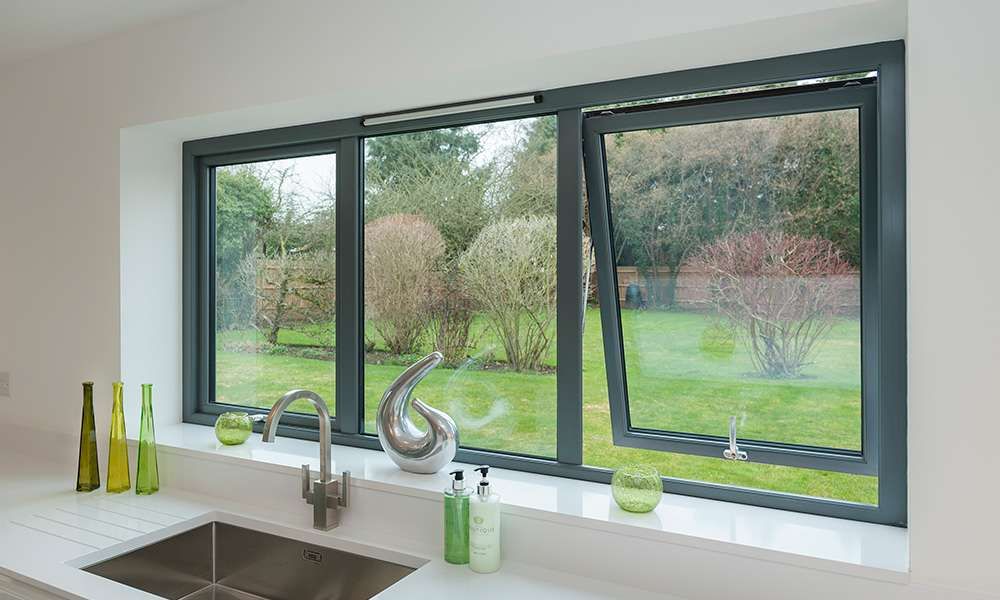
The physics of the awning design supports natural cooling strategies. Heat rises, accumulating near the ceiling. Mounting these windows high on a wall allows this hot air to escape efficiently. Furthermore, because the sash opens outwards from the bottom, it acts as a canopy. This deflection allows you to keep windows open during light-to-moderate showers, maintaining airflow without letting water damage internal sills/floors. This makes them the ideal choice for bathrooms and kitchens, where humidity control and privacy are competing needs.
Security is a major concern for any Awning Window manufacturer. The chain winder itself acts as a significant deterrent. Once the window is wound out, the chain creates a fixed, rigid link. Unlike a sliding window that can sometimes be lifted off its track, a chain-operated sash is anchored firmly. It cannot be easily pried open from the exterior without destroying the mechanism.
Screen compatibility is another distinct benefit. Crank-handle casement windows often require retractable screens or awkward internal sliding panels. Conversely, chain winders allow for permanent Flyscreens or Crimsafe security screens to be installed on the inside of the frame. You can operate the window fully without ever touching or moving the screen, keeping insects out permanently.

Selecting the correct hardware is critical for longevity. A common failure point in residential specifications is the mismatch between sash size and winder capacity. This is often governed by the "1200mm Rule."
When a window sash exceeds 1200mm in width, a single central chain is no longer sufficient. Relying on a single pivot point for a wide sash leads to "corner lift." The corners of the sash farthest from the chain fail to compress against the seal effectively. Over time, this uneven torque warps the sash and strips the winder gears.
Hardware Guidelines:
| Sash Width | Recommended Mechanism | Reasoning |
|---|---|---|
| Under 1200mm | Single Chain Winder | Central torque is sufficient to pull the sash tight against perimeter seals. |
| Over 1200mm | Twin Chain Winder | Requires dual attachment points to distribute wind load and sash weight evenly, preventing twisting. |
The location of your project dictates the material grade required. Standard winders typically use powder-coated zinc die-cast bodies. These are perfectly adequate for inland suburbs. However, coastal environments pose a high risk of salt corrosion. For homes within 5km of the surf, we recommend upgrading to 316 Marine Grade Stainless Steel chains and passivated "Polesium" housings.
The Return on Investment (ROI) here is clear. Standard hardware may seize up or rust within five years in a coastal zone. Investing in corrosion-resistant hardware upfront eliminates the costly need to replace seized winders later. It ensures smooth operation for the life of the window.
Modern winders offer more than just open/close functionality. Look for folding handles that tuck away neatly, clearing the path for roller blinds or plantation shutters. Lockable indicators are also valuable, providing a visual red/green cue so you can check home security at a glance. High-quality units also feature clutch protection, a mechanism that slips harmlessly if a user attempts to overtighten the window, saving the internal gears from stripping.
Aluminum is a durable material, but it is also a high conductor of heat. In winter, standard aluminum frames conduct internal heat to the outside. In summer, they radiate external heat into the home. To combat this, an Energy Efficient Awning Window utilizes a thermal break.
A thermal break consists of a reinforced polyamide strip that physically separates the internal aluminum profile from the external one. This strip stops the transfer of thermal energy. It effectively insulates the frame, preventing the "sweating" or condensation often seen on standard aluminum windows on cold mornings.
When specifying high-performance glazing, you generally have two main tiers of thermally broken systems: G5 and R7.
G5 Thermally Broken: This is an excellent mid-tier residential specification. It offers a significant reduction in U-values compared to standard aluminum. The G5 Thermally Broken Toughened Glass Awning Window is suitable for most Australian climate zones (Zones 2-6), balancing cost with energy efficiency.
R7 Thermally Broken: This system represents a commercial or premium residential specification. It features a wider thermal strip, creating a larger gap between the hot and cold metal. The R7 Thermally Broken Toughened Glass Awning Window is designed to carry heavier loads. It is capable of holding thick Insulated Glass Units (IGUs) up to 24mm or more, making it ideal for large architectural spans.
Investing in a thermally broken frame is wasted if paired with single glazing. The glass constitutes the largest surface area of the opening. To maximize the frame's potential, it must be paired with double glazing featuring Argon gas fill and a Low-E coating. This combination ensures the entire unit complies with stringent 6-star and 7-star energy rating requirements.

Window compliance is not just about weather; it is about safety. The National Construction Code (NCC) mandates strict fall prevention measures for openable windows.
The rule applies to bedroom windows where the internal floor is more than 2 meters above the ground outside. If the sill height is lower than 860mm from the floor, the window opening must be restricted. Chain winders offer an elegant solution here. Instead of installing ugly aftermarket bolts or bars, manufacturers can supply winders with integrated restriction switches. These limit the chain extension to less than 125mm, satisfying the code while maintaining ventilation.
For homes in bushfire-prone areas, hardware choice is a matter of survival. As the Bushfire Attack Level (BAL) increases from BAL-12.5 to BAL-29 and BAL-40, the requirements tighten. High BAL zones require metal hardware with no exposed plastic components that could melt. Specific stainless steel mesh screens are also mandatory.
Chain winder Awning Window units perform exceptionally well in these zones. Their compression seal offers better protection against ember ingress than sliding windows, which have gaps in the tracks. During high winds associated with bushfires, the positive pressure on the sash pushes it tighter against the seal, blocking smoke and embers effectively.
The final visual impact of a window depends on how the hardware integrates with the frame. Modern architectural trends favor clean lines and minimal obstruction.
Specifiers should evaluate "Winder Containment." Older styles often bolted the winder mechanism directly onto the timber reveal or the top of the aluminum sill, looking like an afterthought. Modern, high-end systems recess the winder into the sub-sill. This creates a flush, streamlined look where the hardware feels like part of the extrusion.
We recommend looking for frame widths of 100mm or greater. These wider profiles provide ample space to fully encapsulate the winder mechanism and the screen track, resulting in a cleaner installation.
Always check for "Integrated Screen Channels" in the aluminum extrusion. Cheap alternatives require screens to be drilled or tacked on later using turn-buckles, which looks untidy and can void warranties. Integrated channels allow screens to clip in securely and rattle-free. Finally, always verify external operation clearance. Ensure that when the sash swings out, it does not obstruct decking pathways or hit external privacy screens.
Chain winder awning windows offer the best balance of weatherproofing, acoustic isolation, and ventilation for the varied Australian climate. They solve the perennial problem of keeping rain out while letting fresh air in. However, their performance relies heavily on correct specification.
For long-term value, prioritize Twin Chain Winders for any span over 1200mm. If your budget permits, specify Thermally Broken frames to future-proof your home's energy efficiency. Finally, ensure your hardware is rated for your specific environmental zone, whether you are battling coastal salt spray or bushfire embers. Review your window schedule against these rules before signing off on fabrication to ensure a comfortable, compliant home.
A: Yes, retrofitting is possible, but it requires checking the sill depth and sash weight. You need enough timber reveal depth to mount the winder body securely. If the sash is heavy timber, you must ensure the chain mechanism is rated to handle the load without bending.
A: The primary difference lies in the frame capability and thermal strip width. The R7 usually offers a wider polyamide thermal strip for better insulation and is engineered to hold heavier, thicker glass units, making it suitable for larger commercial or premium residential applications.
A: Maintenance is simple but important. Use a silicone-based spray on the chain annually to keep it running smoothly. Avoid using oil or heavy grease, as these substances attract dust and grit, which can clog the gears and cause the mechanism to grind.
A: This is likely due to the "1200mm Rule" being ignored. If a single chain is used on a wide window (over 1200mm), the corners will lift. Alternatively, the chain length setting may need adjustment (shortening) to pull the sash in tighter against the seals.
A: Yes, they are highly secure. When the window is wound closed and locked, the chain creates a rigid metal link that prevents the sash from being lifted or pried open from the outside. Internal screens add an extra layer of protection.


