Views: 0 Author: Site Editor Publish Time: 2026-11-20 Origin: Site


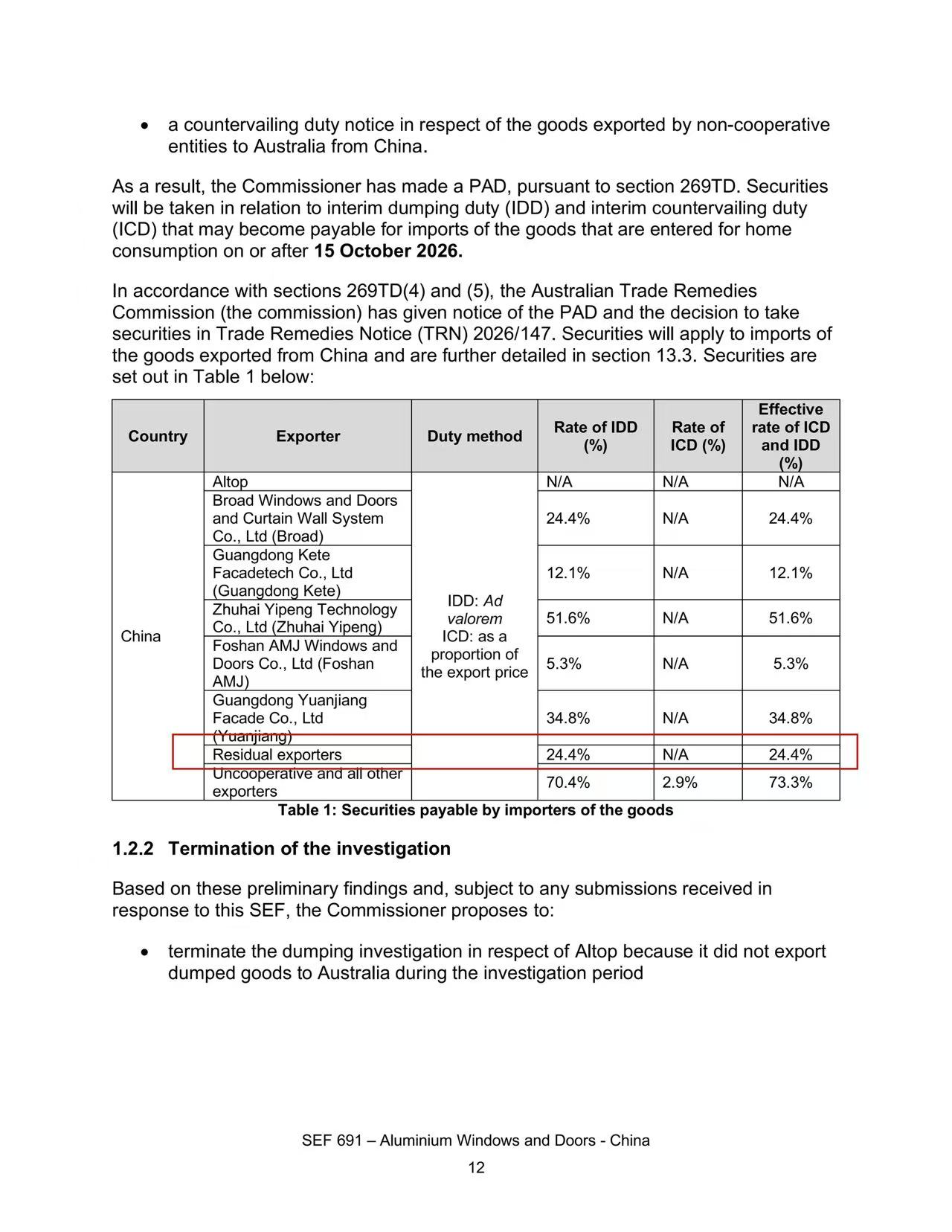
For Australian builders, commercial developers, and window fabricators, procuring imported architectural glazing has entered a new era of regulatory scrutiny. Following the Australian Trade Remedies Commission’s (ATRC) enforcement of provisional financial securities under Investigation Case 691—which impacts Chinese-manufactured aluminium windows and doors cleared for home consumption from October 2026 onward—selecting an unvetted supplier can unexpectedly inflate your landed costs by 5.3% to 73.3%.
However, heightened trade remedies do not force you to absorb inflated local manufacturing quotes or delay construction schedules. By auditing supplier classifications, compliance documentation, and Incoterms upfront, you can protect your project margins legally and predictably.
Before restructuring your supply chain or switching vendors, determine whether your specific window and door schedule actually triggers Case 691 securities (primarily classified under Tariff 7610.10.00, Statistical Code 12).
In-Scope Assemblies: Complete or partially assembled aluminium windows and glazed doors—including perimeter frames, sashes, and panels—regardless of whether they ship glazed, unglazed, thermally broken, or fitted with hardware.
Maximum Size Thresholds: Window units measuring up to 3.0 m high × 4.0 m wide, and door units measuring up to 3.0 m high × 7.0 m wide.
Key Scope Exclusions: Both unitised and stick-built curtain-wall facade systems are explicitly exempt from Case 691 measures.
Customs Timing Rule: Provisional securities are assessed based on the date goods are entered for home consumption at an Australian port—not when you issue a purchase order or pay a deposit. Always align shipping schedules with customs clearance milestones.
Anti-dumping and countervailing duties are not applied as a flat blanket tariff across China. Under the ATRC’s preliminary findings, provisional security rates vary substantially depending on how actively a manufacturer participated in the investigation:
| Exporter Classification | Provisional Security Range | Procurement Risk Level |
| Exempt / Zero-Duty Examined Factories | 0% (Pending final ministerial ruling) | Low |
| Individually Examined Cooperating Exporters | 5.3% – 51.6% | Moderate (Confirm exact entity rate) |
| Residual Cooperating Exporters | ~24.4% | Moderate–High |
| Non-Cooperating / All Other Exporters | Up to 73.3% (Combined dumping & subsidy) | Critical (Avoid) |
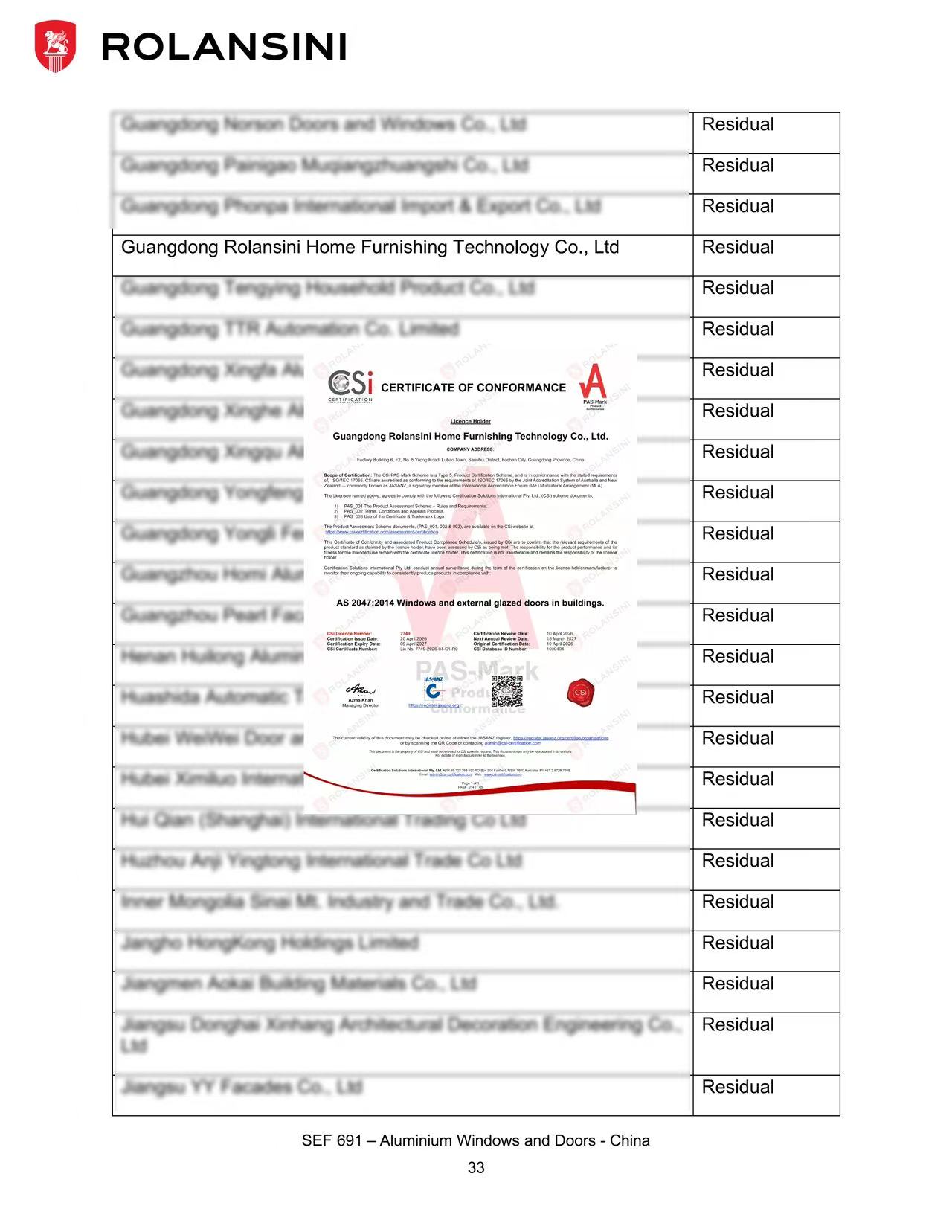
Due Diligence Step: Ask your prospective vendor for the exact legal business name that will appear on the Commercial Invoice and Certificate of Origin, then cross-check that entity against the official Electronic Public Record (EPR 691). Avoid procuring through opaque trading intermediaries that source from unexamined factories defaulting to the 73.3% residual penalty bracket.
To sidestep duties on Chinese imports, many procurement teams immediately look toward Southeast Asian manufacturing hubs such as Vietnam or Malaysia. While diversifying into third-country fabrication can work, rushing into Southeast Asia introduces two major Australian Border Force (ABF) compliance hazards:
Pre-Existing Extrusion Remedies: Australia already enforces active anti-dumping and countervailing measures against certain aluminium extrusions originating from countries like Vietnam.
Strict Rules-of-Origin Audits: Importing Chinese extruded profiles into a third country merely for cutting, fabrication, or glazing does not alter the country of origin. If audited by the ABF, misdeclared origin claims can lead to retroactive duty demands and severe financial penalties.
To stay compliant when sourcing outside China, partner exclusively with vertically integrated manufacturers that melt, cast, and extrude their own aluminium billets locally and can supply traceable mill certificates.
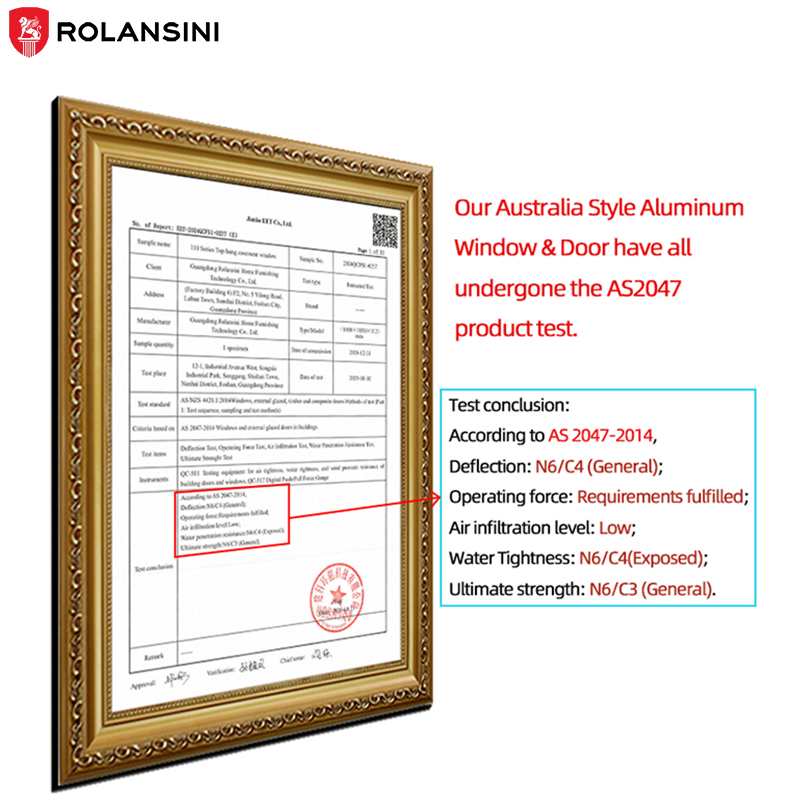
Customs classifications and Australian building regulations operate independently. Even if an overseas supplier qualifies for a 0% provisional duty rate, their fenestration products cannot be legally signed off by an Australian building certifier without verifiable compliance documentation:
AS 2047: Mandatory laboratory testing covering structural deflection, air infiltration, water penetration resistance, and operating force for external windows and glazed doors.
AS 1288: Compliance governing glass selection, human impact safety, and glazing installation methods.
WERS (Window Energy Rating Scheme): Independently verified U-values and Solar Heat Gain Coefficients (SHGC) required to satisfy National Construction Code (NCC) energy-efficiency provisions.
Always insist on reviewing NATA-accredited (or mutually recognized ILAC) test reports that match the exact framing profile series, maximum span dimensions, and hardware configuration quoted for your project.
With final ministerial determinations for Case 691 scheduled following the Commission’s December 2026 final report, current provisional security rates remain subject to upward or downward revision. Safeguard your construction budget with two contractual protections:
Demand Transparent Landed-Cost Breakdowns: Require suppliers or freight forwarders to separate FOB factory value, international ocean freight, local port charges, and estimated customs securities rather than bundling them into an opaque lump sum.
Include Tariff-Adjustment Clauses: Clearly define in your supply agreement which party bears financial responsibility if final ministerial rates exceed provisional securities—and who is entitled to customs refunds if rates are reduced.
Before releasing a deposit to any overseas architectural glazing supplier, verify these four items in writing:
Dimension Audit: Confirm whether your window schedules sit inside or outside the 3.0 m × 4.0 m (windows) and 3.0 m × 7.0 m (doors) Case 691 thresholds.
Entity Verification: Match the manufacturer's legal name on your proforma invoice directly against EPR 691 exporter listings.
Technical Compliance: Audit complete AS 2047 and AS 1288 test reports for the exact profile series being supplied.
Duty Liability Terms: Lock in written Incoterms, estimated arrival windows, and retroactive tariff risk-sharing terms prior to production.