
Views: 0 Author: Site Editor Publish Time: 2026-06-12 Origin: Site


Navigating bushfire compliance in Australia goes beyond mere regulatory box-checking. It stands as a critical life-safety and asset-protection investment. Extreme weather events continue to challenge our built environment. Because of this, ensuring your property can withstand severe fire threats is non-negotiable. Building in bushfire-prone areas requires strict adherence to the AS 3959:2018 standard. However, buyers often face a confusing landscape. You might encounter fragmented compliance claims, piecemeal components, and vague material specifications. This fragmentation often leads to costly mistakes during building inspections.
Our objective is to equip builders, architects, and homeowners with a rigorous, evidence-based framework. You will learn exactly how to evaluate and specify the right products. We focus heavily on clear compliance pathways, proven material durability, and highly functional architectural configurations. This guide removes the guesswork from securing your property against nature's most destructive forces.
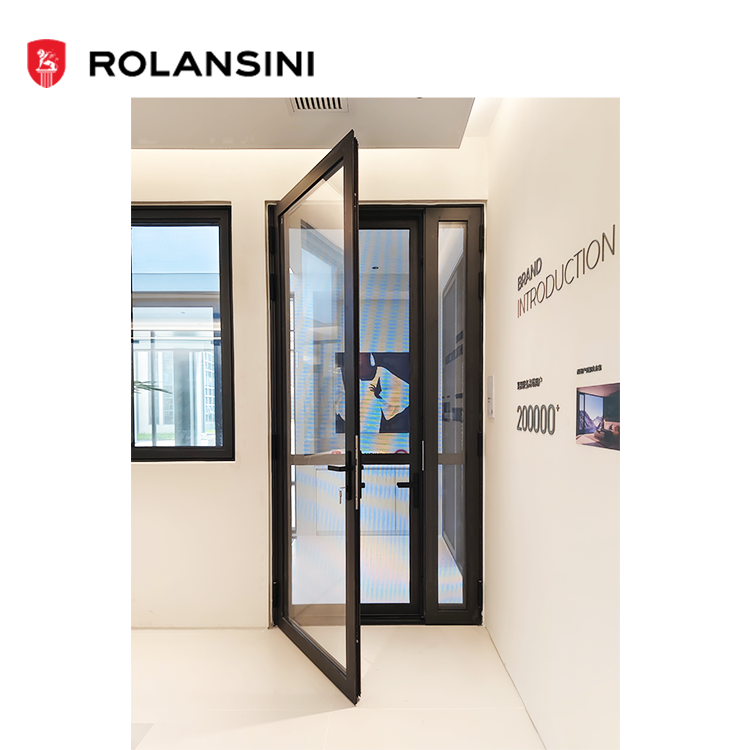
System Integrity is Mandatory: A compliant door is a complete assembly. The door leaf, frame, seals, and hardware must be tested and installed as a unified system to meet AS 1530.8.1/8.2 standards.
Material Longevity: While specific hardwoods are permitted in lower BAL zones, bushfire rated aluminium doors in Australia provide superior long-term dimensional stability, preventing the warping that can compromise crucial fire seals.
Configuration Matters: Hardware, glass thickness (4mm to 6mm+), and ember-mesh requirements (<2mm aperture) shift dramatically depending on whether you specify a sliding door, hinged door, or bi-fold door.
Tested Systems > DTS: Prioritizing independently "Tested Systems" over "Deemed-To-Satisfy" (DTS) component matching drastically reduces the risk of certification failure during final building inspections.
Building a home in a designated bushfire zone requires absolute precision. Local councils and private certifiers strictly enforce AS 3959:2018. The assessment reality is harsh. Failing a final inspection due to non-compliant doors results in severe project delays. You cannot simply modify a failed door. You must tear it out and order a costly replacement. This halts your occupancy certificate and drains your budget.
You generally face two compliance pathways. The first is Deemed-To-Satisfy (DTS). The second involves Tested Systems. DTS involves assembling individual compliant materials. For example, you might buy a heavy timber door. Then you add specific weather strips and glass. This approach carries a very high risk of installation error. Certifiers frequently reject DTS assemblies because the parts do not function cohesively.
Tested Systems offer a vastly superior alternative. They are pre-engineered assemblies. Independent laboratories test them thoroughly. These complete units withstand specific radiant heat fluxes measured in kilowatts per square meter (kW/m²). They offer low risk and highly reliable certification.
Many builders fall for the "Standard Commercial Door" myth. Standard industrial or heavy-duty commercial doors are not inherently bushfire-rated. A thick door does not guarantee safety. Commercial doors lack the specialized ember-resistant seals required for Bushfire Attack Level (BAL) compliance. They also lack the required thermal glazing. You must specify purpose-built products.
Your doors must actively resist four primary bushfire threats. We call this the Threat Matrix. It includes radiant heat, wind-borne embers, smoke infiltration, and debris impact. Radiant heat can cause spontaneous ignition of indoor furnishings through standard glass. Wind-borne embers exploit tiny gaps to start internal fires. Smoke infiltration poses severe health risks. Debris impact shatters weak glazing.
Ratings from BAL 12.5 to BAL 29 focus primarily on embers and moderate heat. The regulations mandate tight manufacturing tolerances. You must use a minimum of 4mm to 5mm toughened safety glass. Operable parts require a metallic ember mesh. This mesh must have an aperture of less than 2mm. Your door seals must strictly prevent ember and draft intrusion.
Ratings from BAL 40 to BAL FZ address extreme radiant heat and direct flame contact. The rules become highly restrictive here. You need a minimum of 6mm toughened safety glass. The frames must be completely non-combustible. Specialized hardware is mandatory. BAL 40 mandates specific seal characteristics. The seals must possess a flammability index of no greater than 5. BAL FZ usually requires extreme radiation-shielding designs. Certifiers often require compliant external shutters to pair with the doors.
| BAL Rating | Primary Threat Focus | Minimum Glass Requirement | Frame & Seal Constraints |
|---|---|---|---|
| BAL 12.5 & 19 | Embers & Low Heat | 4mm - 5mm toughened safety glass | Tight tolerances, draft/ember seals required |
| BAL 29 | High Embers & Moderate Heat | 5mm (windows) / 6mm (doors) toughened | Specific hardwood or metal; strict ember sealing |
| BAL 40 | Extreme Radiant Heat | 6mm toughened safety glass | Non-combustible frames; Seal flammability index ≤ 5 |
| BAL FZ | Direct Flame Contact | Specialized fire-rated glazing | Extreme radiation shielding; external shutters often required |
Architects historically relied on heavy timber for bushfire regions. However, timber has significant limitations. Specific high-density timbers are permitted up to BAL 29. These include Blackbutt, Spotted Gum, and Merbau. They must meet a minimum thickness of 35mm. While visually appealing, they demand rigorous ongoing maintenance. Timber absorbs moisture. It dries out in the summer heat. This cycle causes warping, shrinking, or swelling. Such movement easily compromises the strict 3mm gap tolerance required for ember protection.
Aluminium provides a definitive structural advantage. Specifying bushfire rated aluminium doors Australia ensures crucial dimensional stability. Aluminium does not warp under extreme Australian weather fluctuations. The structural integrity remains constant. This ensures your specialized fire seals remain flush and effective year-round.
Furthermore, aluminium is inherently non-combustible. It seamlessly meets stringent BAL 40 and BAL FZ frame requirements. It achieves this without relying on toxic chemical retardants. This simplifies the certification process immensely. It also delivers a high return on investment. Aluminium eliminates the endless need for periodic re-staining, sanding, or sealing. You install the system once, and it maintains its defensive properties indefinitely.
Best Practice: Always request NATA-accredited test reports for your exact frame and glass combination.
Common Mistake: Assuming a standard aluminium frame equals a bushfire-rated frame. Standard frames lack the required internal reinforcements and high-temperature seals.
Your choice of door style heavily dictates the required engineering. The compliance parameters shift dramatically depending on the specific configuration you choose.
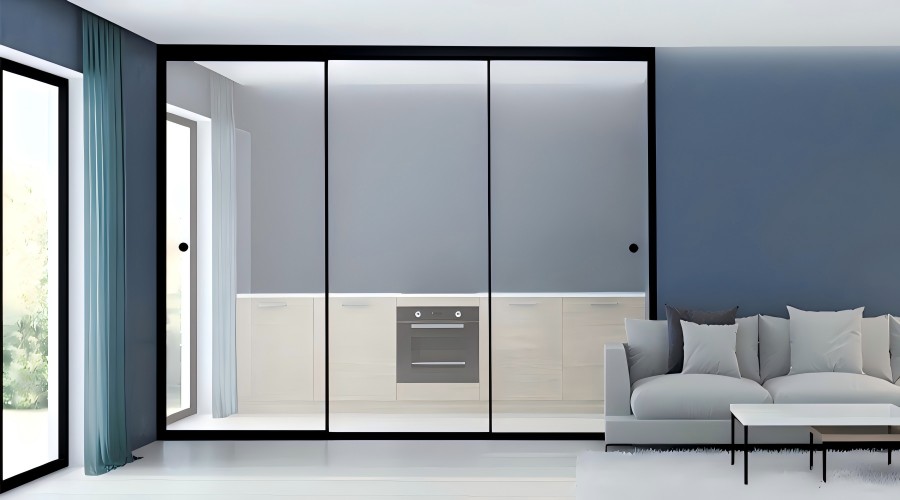
Evaluating a Sliding Door requires close attention to the bottom track. The tracks must be explicitly designed to resist ember build-up. Standard tracks collect debris, creating a localized fire hazard. Hardware selection is equally critical. You need heavy-duty, high-temperature-resistant rollers. During a fire, extreme thermal expansion occurs. Standard plastic or low-grade metal rollers will melt or jam. High-temperature rollers ensure the door remains operable, allowing you to evacuate safely.
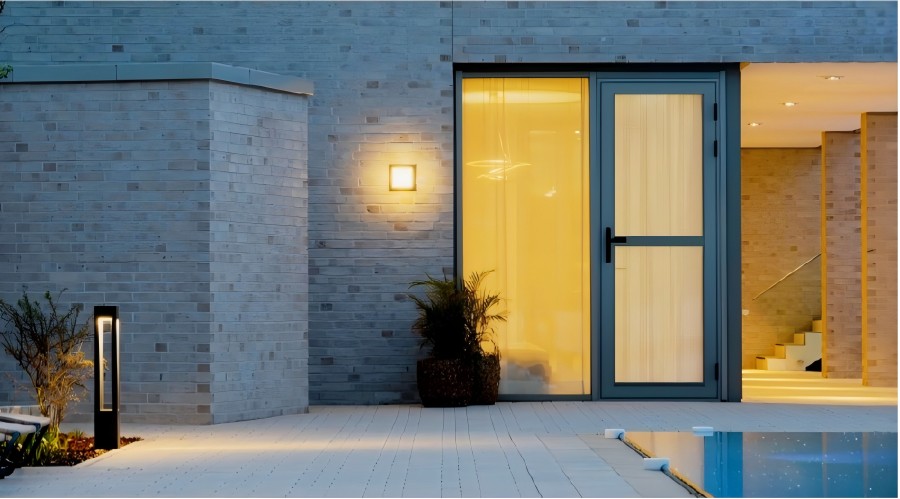
A Hinged Door represents the most straightforward path to compliance. It naturally provides a tight, verifiable perimeter seal when closed. However, the hardware demands are high. You require robust, multi-point locking systems. A single central lock allows the door corners to warp outward under intense heat. Multi-point locks hold the door rigid. You must also specify heat-rated hinges. These hinges maintain essential seal compression against the frame during a prolonged heat attack.
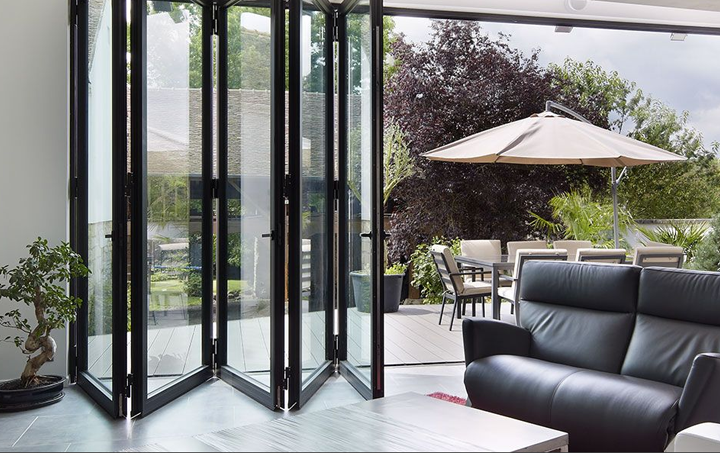
Specifying a Bi-fold Door introduces complex certification challenges. These units contain multiple folding leaves. They possess an extensive perimeter of seals. Every single joint is a potential vulnerability. The hardware requires precision-engineered tracks. You need highly specialized interlocking seals. These specialized seals ensure no ember gaps appear between the individual panels when fully closed. Achieving a verified tested system rating for a bi-fold setup requires advanced engineering.
Procuring the right product is only the first step. Installation errors ruin perfectly good materials. The certifier assesses the installed system, not the marketing brochure.
You must understand the absolute dependency between the door and the frame. A bushfire-rated door leaf is entirely useless if installed in a non-compliant residential frame. It provides zero protection. You must treat the entire aperture as a single, interdependent unit. The frame, the leaf, the hinges, and the seals must match the exact specifications detailed in the laboratory test report.
Builders frequently fail inspections due to the 400mm low-level glazing rule. The AS 3959 standard places strict requirements on any glass positioned within 400mm of the ground, decks, or other horizontal surfaces. Embers accumulate on these surfaces. They ignite debris and subject the lower glass to intense localized heat. Meeting this rule often necessitates much thicker glass. Alternatively, you may need protective external metal screens across the bottom section.
Installation tolerances present another major hurdle. Purchasing a fully compliant Tested System solves only half of your problem.
Precise Clearances: The installer must maintain exact gap clearances around the perimeter.
Proper Seating: Ember seals must be fitted precisely without crimping or tearing.
Approved Sealants: Only specific fire-rated intumescent mastics can be used around the external frame joints.
If the installer ignores these precise tolerances, the building certifier will immediately reject the installation. You must use contractors experienced with BAL regulations to ensure final compliance.
Selecting the right bushfire door requires careful balancing. You must weigh localized BAL assessments against long-term material durability and your architectural intent. Never view compliance as an afterthought.
Your shortlisting logic should be ruthless. Prioritize manufacturers who openly provide clear, NATA-accredited test reports. Demand reports for complete systems rather than individual, mismatched parts. This eliminates the massive risks associated with DTS assemblies.
For your next steps, consult with a qualified bushfire assessor immediately. Confirm your exact site rating before drawing up plans. Once confirmed, request technical specification sheets for pre-engineered, "Tested System" doors. This proactive approach ensures seamless final certification and guarantees your property’s long-term security.
A: While minor upgrades can assist in low-risk zones, full retrofitting is rarely viable. Adding metal mesh screens helps minimally. Upgrading to BAL 29, BAL 40, or BAL FZ generally requires a complete replacement. You must replace the door, frame, and glazing system entirely to guarantee compliance and safety.
A: Yes. Certification relies entirely on the performance of the complete system. Installing a highly rated door leaf into a standard timber or non-compliant frame instantly voids the certification. It drastically compromises your building's defense against radiant heat and embers.
A: Under the AS 3959 standard, any operable window or door designed for ventilation requires specific protection. You must protect it with a screen featuring a maximum aperture of 2mm. The mesh must consist of corrosion-resistant steel, bronze, or aluminium to prevent wind-borne embers from entering.


