
Views: 0 Author: Site Editor Publish Time: 2025-12-30 Origin: Site


The architectural shift toward "biophilic design" has fundamentally changed how Australian homes connect with their environment. Modern residential projects increasingly demand floor-to-ceiling glass to dissolve the boundary between indoor living spaces and the outdoors. However, this aesthetic drive creates a practical tension. Maximizing a view often compromises a home’s thermal efficiency and privacy, leaving homeowners struggling with heat gain in summer and heat loss in winter.
The solution to this trade-off lies in the simplest element of the building envelope: the Aluminium Fixed Picture Window. Unlike operable windows that rely on moving sashes and complex hardware, a fixed window is a static, high-performance glazing asset. It provides the structural rigidity required for large spans while eliminating the air gaps inherent in sliding or awning systems. This guide moves beyond simple aesthetics to evaluate the critical engineering factors—thermal breaks, glazing specifications, ROI, and compliance with Australian Standards (AS2047/AS1288)—ensuring your glazing choices perform as well as they look.
Superior Sealing: Fixed windows offer the highest air infiltration ratings and acoustic performance because they lack operable gaps.
Cost Efficiency: Eliminating high-end hardware (winders, hinges, motors) significantly lowers the cost per square meter compared to bifold or sliding systems.
Thermal Necessity: Standard aluminium frames conduct heat; specifying Thermal Break Fixed Picture Windows is critical for meeting 7-star NatHERS energy ratings.
Strategic Placement: Effective design separates "viewing" (fixed glass) from "ventilation" (louvres or awnings) to optimize both functions.
A Fixed Picture Window is defined as a non-operable, sealed unit designed exclusively for light intake and framing views. While it may seem like a simple glass panel, its engineering value lies in what it doesn't have. By removing the need for sash mechanics, manufacturers can focus entirely on structural integrity and sealing.
In the lifecycle of a building, moving parts are typically the first points of failure. Winders strip, hinges rust, and sliding tracks accumulate debris that compromises smooth operation. Fixed windows possess a "zero-failure" advantage. There is no sash drop over time, no hardware degradation, and the seals remain permanently compressed against the frame.
This permanent seal also drives acoustic performance. Sound waves travel through air gaps. Even the highest quality sliding window has a small margin of air infiltration at the interlock. In contrast, a Soundproof Fixed Picture Window creates a hermetic barrier. When paired with laminated acoustic glass, fixed aluminium units achieve superior Sound Transmission Class (STC) ratings, making them the preferred choice for street-facing facades in noisy urban environments.
Modern architectural trends favor "disappearing" frames. Aluminium offers a strength-to-weight ratio that timber and uPVC cannot match, allowing for significantly slimmer profiles. This maximizes the frame-to-glass ratio, ensuring the view remains the hero of the room.
For residential builds requiring expansive views—such as a 3-meter wide span overlooking a coastline—builders often utilize "Commercial Framing" profiles (100mm or 150mm). These robust sections provide the structural rigidity needed to resist high wind loads without requiring bulky steel reinforcements, maintaining a sleek, modern look.
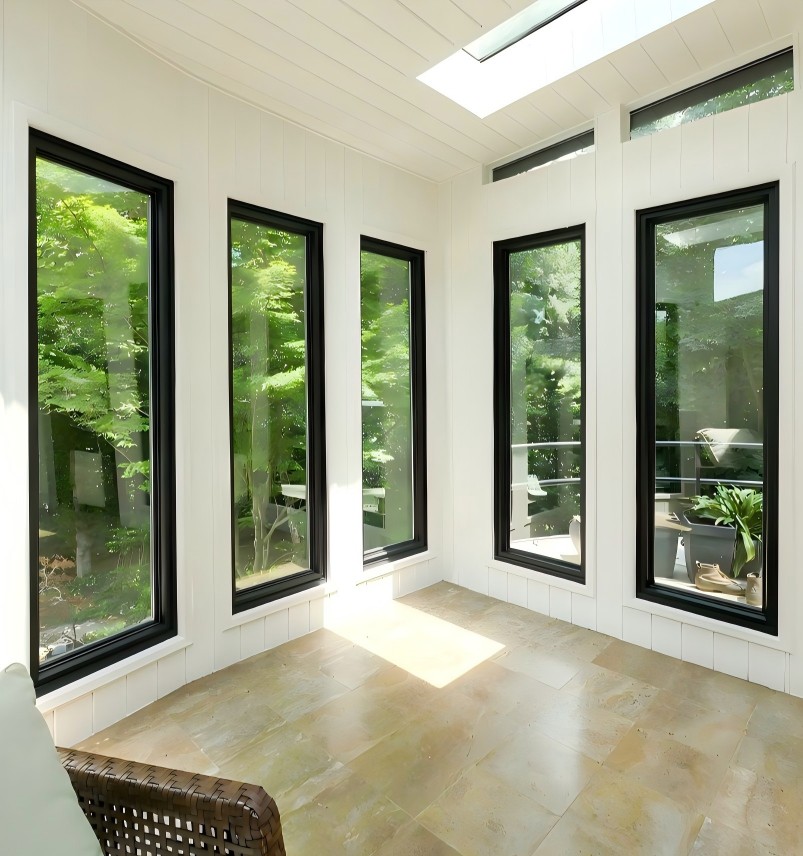
Selecting the right window goes beyond picking a size. To ensure the window performs in the Australian climate, you must address the conductivity of the material and the composition of the glass.
Aluminium is an excellent conductor of heat. In the past, this meant aluminium frames would readily transfer outside heat into a cool room during summer, and leak internal warmth during winter. This characteristic previously made it difficult to achieve high energy ratings.
The industry solution is the Thermal Break Fixed Picture Window. This technology inserts a reinforced polyamide strip between the internal and external aluminium profiles. This strip acts as an insulator, effectively stopping the flow of thermal energy. For any Australian home aiming for a 7-star NatHERS rating or higher, thermally broken frames are not a luxury—they are a necessity.
The glass panel constitutes roughly 90% of the window's surface area. Your choice here dictates the unit's total insulation value (U-value) and solar heat gain coefficient (SHGC).
Double Glazing: A Double Glazed Fixed Picture Window should be the standard specification for modern builds. The argon-filled gap between the two panes acts as a thermal buffer, significantly reducing heat transfer compared to single glazing.
Low-E Coatings: Low-Emissivity glass is essential for North and West-facing elevations. It allows visible light to pass through while reflecting a significant portion of solar radiation (infrared heat) back outside.
Safety Glass (AS1288): Australian Standard AS1288 dictates safety requirements. Any low-level glass (close to the floor) or panels exceeding specific size thresholds must use toughened or laminated safety glass to prevent injury upon impact.
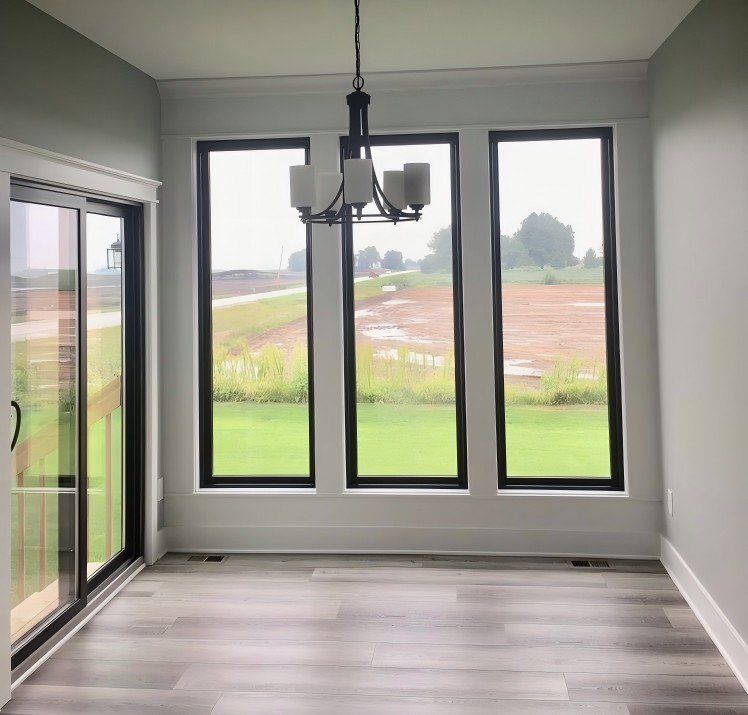
Not all fabricators produce the same quality. When vetting a Fixed Picture Window manufacturer, you need to verify their production capabilities and durability standards.
| Question for Manufacturer | Why it Matters |
|---|---|
| Do you extrude your own profiles or import them? | Local extrusion often ensures better compliance with Australian alloy standards and faster replacement times. |
| Are the powder coat finishes rated for coastal environments? | Salt spray can corrode standard finishes. Coastal builds require specific warranty-grade powder coating (e.g., 25-year warranty). |
| Can you integrate flyscreens if coupled with an operable sash? | If the fixed pane is next to a louvre, seamless screen integration is vital for aesthetics and insect protection. |
A common mistake in residential design is assuming every window needs to open. This leads to unnecessary costs and clunky hardware obstructing clear views. A more sophisticated approach uses "Function Separation."
This design logic suggests separating the role of "viewing" from "ventilation." You can install a large, uninterrupted fixed panel to frame the landscape, flanked by narrow, solid louvres or awning windows to handle airflow. This hybrid approach optimizes both functions: you get a cinema-like view without flyscreens or mullions, and efficient cross-ventilation from the side panels.
Solar orientation dictates the specification of your glass. Treating every side of the house the same is a recipe for thermal inefficiency.
North Facing: This is the prime location for fixed windows, provided they are shaded by eaves. They admit desirable winter sun to warm the slab but block high-angle summer sun.
South Facing: South-facing windows receive consistent, soft, diffuse light with minimal heat gain. This is the ideal orientation for home offices or studios where glare control is important.
West Facing: The western sun is low and harsh in the afternoon. Large fixed glass here poses a high risk of overheating the home. If a view demands a window here, it requires an Energy Efficient Fixed Picture Window with high-performance tinting, Low-E coatings, or external automated blinds.
Beyond thermal performance, placement affects how you experience the space. Adhere to the "Rule of Thirds" when designing large combinations. Avoid placing a heavy mullion (vertical frame divider) directly in the center of the view. It splits the landscape and draws the eye to the frame rather than the outdoors.
Consider "Highlight Windows" (high-level clerestory windows) for bathrooms or hallways. They capture natural light and vent hot air (if operable) while maintaining total privacy from neighbors. Furthermore, be wary of glare. Placing a large picture window directly opposite a television or computer workstation can render screens unreadable during the day.
Australian building regulations are stringent, particularly regarding glazing. Non-compliance can lead to failed certifications and costly retrofits.
Two primary standards govern window selection. AS2047 covers the structural deflection and water penetration resistance of the window unit. A fixed window must prove it won't leak under pressure or bow excessively in high winds. AS1288 governs glass selection, dictating the minimum thickness required based on the panel's size and the wind load (N or C ratings) of the specific site.
In Bushfire Prone Areas, material selection is a matter of safety. Aluminium is vastly superior to timber in zones rated BAL-29 and BAL-40. Timber frames can ignite or degrade under radiant heat, whereas aluminium maintains structural integrity at higher temperatures. In these zones, compliance often requires metal-reinforced seals and toughened glass to prevent the pane from shattering under thermal stress, which would otherwise allow embers to enter the home.
Ironically, the window that doesn't open is often the most secure. Fixed windows have no locks to pick and no sash to jemmy open. Forced entry requires smashing the glass, which is noisy and difficult, especially if laminated glass is used. Laminated glass features a plastic interlayer that holds the shards together even when broken, acting as a significant deterrent to intruders.
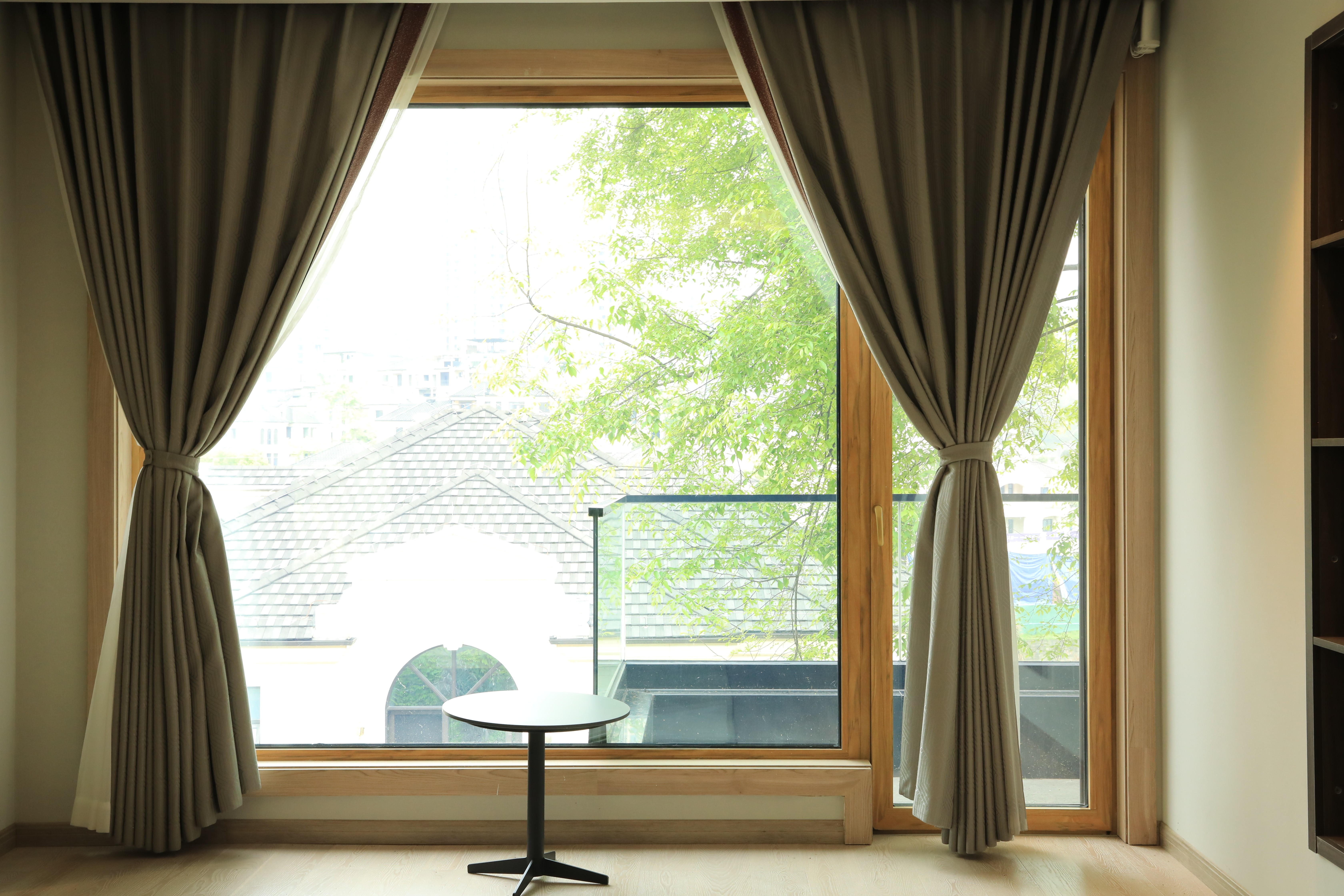
When budgeting for a build or renovation, homeowners often look at the price tag of glazing without considering the total cost of ownership or the return on investment.
Fixed windows are generally 20-30% cheaper than equivalent operable windows (like bifolds or casements). This cost reduction comes from the absence of complex gearing, winders, friction stays, and multi-point locks. For a large home, swapping unnecessary operable windows for fixed panels can save thousands of dollars upfront.
Maintenance costs are also negligible. There are no wheels to replace, no tracks to vacuum, and no hinges to lubricate. The only maintenance required is simple cleaning.
The airtightness of a fixed unit contributes directly to lower HVAC costs. While a Fixed Picture Window with a thermal break costs more initially than a standard aluminium frame, the Return on Investment (ROI) is realized through reduced monthly energy bills. Furthermore, as the National Construction Code (NCC) pushes for higher energy targets, high-performance glazing ensures your property remains compliant and attractive to future eco-conscious buyers.
Natural light is a top tier driver of property valuation in the Australian market. Replacing dated, multi-pane timber windows with single-pane aluminium picture windows can modernize a facade instantly. It creates the "open plan" feel that dominates current market preferences, increasing the perceived size and value of the living areas.
Aluminium fixed picture windows are the workhorse of modern architectural glazing. They deliver the best views, the highest insulation, and the best security per dollar spent. By removing mechanical complexity, they offer a durable, low-maintenance solution that meets the rigorous demands of the Australian climate.
Final Decision Rubric:
Assess the View: If the landscape is worth framing, choose fixed glass to eliminate visual obstructions.
Assess Ventilation: If airflow is required, do not compromise the view. Add a dedicated ventilation window (louvre or awning) alongside the fixed panel.
Specify Correctly: For any panel over 2m², demand thermal breaks and double glazing to ensure the room remains habitable year-round.
To ensure your design is feasible, particularly for large spans in high-wind areas, consult with a structural engineer or window fabricator early in the process. They can verify wind loads and recommend the correct framing profiles to bring your vision to light safely.
A: Yes, retrofitting is common. However, if you intend to widen the existing opening to install a larger panoramic window, you must check the lintel support. A structural engineer or builder must verify that the brickwork above the new opening is adequately supported before installation begins.
A: Standard aluminium is a conductor and not inherently energy efficient. To achieve high performance, the window must be "thermally broken" (using an insulating strip) and fitted with double glazing. This combination creates a highly efficient barrier against heat transfer.
A: The maximum size depends on the glass thickness and the site's wind load rating. However, residential commercial-grade frames can often handle spans up to 2.4m high by 3m wide before requiring specialized structural glazing or heavier steel reinforcement.
A: This is a critical design consideration. Since they do not open, cleaning the exterior requires external access (ladders or scaffolding) or the use of extendable cleaning poles. For hard-to-reach areas, consider specifying "self-cleaning" glass, which uses a coating to break down dirt.
A: Generally, yes. Fixed windows are typically 20-30% cheaper than sliding windows of the same size. This is because they require fewer aluminium profiles and contain no moving hardware like rollers, tracks, or locks, reducing manufacturing complexity.


