
Views: 0 Author: Site Editor Publish Time: 2026-05-27 Origin: Site


Procuring building components for Australian construction projects goes far beyond aesthetics or simple baseline pricing. It acts as a strict regulatory gateway protecting the structural integrity of your build. Uncertified products present a severe risk in today's demanding construction landscape. Installing non-compliant frames directly results in blocked occupancy certificates, heavy National Construction Code (NCC) penalties, and devastating project delays.
Surveyors demand absolute proof of local compliance before approving any residential or commercial handover. In this guide, you will learn how to navigate the complex compliance requirements surrounding these vital installations. We will detail the necessary certification stack required by local authorities. You will discover how to evaluate climate-specific engineering needs across different regions. Finally, we outline the correct installation methodologies required for a successful, compliant project handover.
Strict Exclusivity: Overseas certifications (CE, US, China) hold no legal weight in Australia; AS 2047 compliance is mandatory.
The Certification Stack: True compliance requires AS 2047 (Frames) + AS 1288 (Glass) + WERS (Energy Ratings).
Verification is Visual and Documented: Compliant products must feature a permanently attached Performance Label (never on the glass) and be backed by NATA-accredited test reports.
Installation Parity: A certified door installed with incorrect flashing or lacking appropriate weepholes immediately voids compliance.
The National Construction Code (NCC) strictly enforces local building standards. Building surveyors actively cite these rules during mandatory site inspections. If you fail to provide appropriate certification, the building surveyor will immediately halt the handover process. This guarantees blocked occupancy permits and massive holding costs.
Laboratories evaluate compliant products across five non-negotiable test dimensions. Assessors measure these factors using rigorous, highly controlled conditions:
Structural Performance: Testers evaluate frame deflection limits under specified site wind loads. They measure both the Serviceability Limit State (SLS) and the Ultimate Limit State (ULS). SLS ensures the glass does not crack under normal wind pressure. ULS guarantees the frame survives extreme storm events without catastrophic failure.
Water Penetration Resistance: Frame systems must prevent water ingress during extreme weather events. Laboratories measure this resistance in Pascals (Pa). A standard residential build might require 150 Pa, while coastal high-rises often demand 600 Pa or more.
Air Infiltration: Sealing performance remains crucial for thermal efficiency targets. Better seals mean lower HVAC energy loss. Assessors mandate strict air leakage limits to meet NCC Section J requirements.
Operating Force: Assessors enforce strict ease-of-use thresholds. This ensures accessibility for all users, including the elderly or mobility-impaired individuals. Doors must glide or swing without excessive physical strain.
Materials & Construction: Testing validates the structural integrity of frame joints, hardware connections, and weather seals. The physical assembly must withstand decades of daily use.
Many buyers fall into the dangerous import trap. Foreign compliance documents hold zero legal weight in this region. You cannot substitute European (CE) or American (NFRC/AAMA) certificates. All imported products must undergo specific Australian testing protocols.
Builders must nominate the site's wind rating before ordering frames. Sites receive classifications ranging from N1 to N6 for non-cyclonic areas. Cyclonic regions use classifications from C1 to C4. Different door mechanics handle wind pressure and water loads in distinct ways.
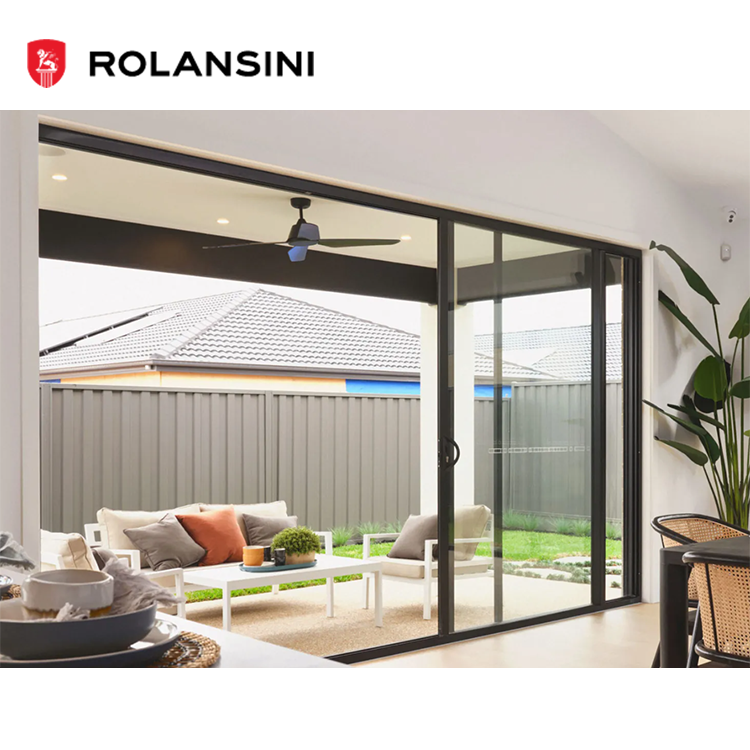
Consider your Sliding Door selections carefully. You must focus heavily on track drainage and water penetration thresholds. In cyclonic zones or high-exposure coastal sites, track profiles require larger drainage capacities. They must physically accommodate higher water volumes without overflowing indoors. Manufacturers often integrate deep sub-sills and specialized weather baffles. These components prevent wind-driven rain from breaching the interior threshold.
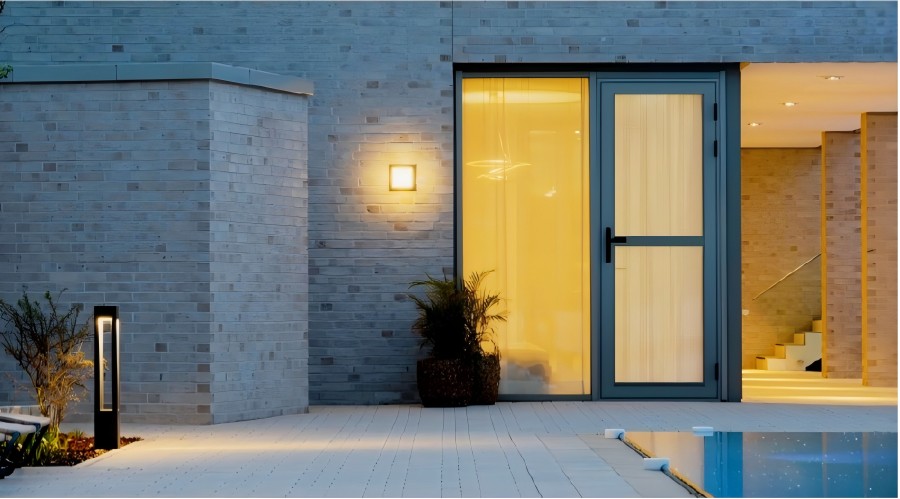
Next, evaluate your Hinged Door mechanisms. Assess the hardware locking points and continuous perimeter sealing. Premium hinged systems utilize multi-point locking hardware. This hardware tightly compresses the sash against rubber weather seals. These seals prove crucial for meeting stringent operating force limits. They also ensure compliance with strict Bushfire Attack Level (BAL) sealing requirements. A tight perimeter seal prevents dangerous ember ingress during bushfires.
Finally, address structural deflection risks in your Bi-fold Door systems. These complex units rely on top-hung or bottom-rolling tracks across incredibly wide spans. The aluminium profile thickness becomes vital here. Manufacturers must use a minimum extrusion thickness of 1.6mm to 2.0mm. Thinner profiles will inevitably sag under heavy structural loads over time. Sagging tracks cause rollers to jam, rendering the entire system inoperable.
Procurement teams must verify a combined stack of certificates. Relying solely on a structural frame test leaves massive compliance gaps. A singular certificate never covers the entire assembly.
Glass safety requires separate verification under AS 1288 and AS 2208. These standards dictate specific safety glass thicknesses based on panel size. They outline human impact requirements for high-traffic zones. Assessors also mandate correct glazing block usage to prevent glass-to-metal contact during thermal expansion.
Energy efficiency links directly to the Window Energy Rating Scheme (WERS). We tie air infiltration results to WERS U-values and Solar Heat Gain Coefficients (SHGC). You need this specific combination to meet the NatHERS 7-Star energy rating targets. Building designers rely on these figures to model the entire home's thermal performance envelope.
Bushfire compliance under AS 3959 represents another critical layer. Different climate zones require specific BAL ratings, ranging from BAL 12.5 to BAL 40. Higher ratings demand appropriate stainless steel mesh screens. They also require specialized heat-resistant glazing wedges and fire-rated toughened glass.
| Standard / Scheme | Primary Focus | Key Metric Measured | Impact on Project |
|---|---|---|---|
| AS 2047 | Frame structural integrity and weatherproofing | Pascals (Pa) / Deflection limits | Ensures survival during extreme weather events. |
| AS 1288 / AS 2208 | Glass safety and human impact resistance | Glass thickness / Toughening standards | Prevents severe injury from accidental collisions. |
| WERS | Thermal performance and energy efficiency | U-value / SHGC | Dictates NCC Section J and NatHERS 7-Star compliance. |
| AS 3959 | Bushfire resilience | BAL Rating (12.5 to 40) | Mandates fire-rated materials in designated bushfire zones. |
Spotting incomplete documentation saves projects from catastrophic tear-outs. You must implement a rigorous due diligence checklist before signing any purchase orders. When you source AS 2047 aluminium doors Australia, visual proof acts as your first line of defense.
First, mandate a strict Performance Label check for every delivered unit. Suppliers must attach the official label directly to the inside frame. They must never stick it on the removable glass. The label must clearly display the manufacturer ID, site wind rating, and water penetration rating in Pascals (Pa). Certifiers look for this exact label during site walk-throughs.
Second, request actual NATA test reports. Do not accept verbal assurances from sales representatives. Require formal documents from NATA-accredited laboratories. Internationally recognized equivalents, such as Intertek, also suffice. Ensure the report matches the exact extrusion profile system you purchased. A report for a generic sliding window cannot cover a custom heavy-duty door.
Third, verify the core material and hardware specifications. Premium manufacturers utilize 6063-T5 aluminium alloy. This specific temper provides maximum yield strength for architectural spans. Insist on localized hardware capable of handling heavy double-glazed units. Australian-standard multi-point locks and stainless steel rollers prevent premature mechanical failure.
Finally, conduct thorough warranty verification. Seek extended structural and powder-coating warranties spanning 7 to 10 years. These guarantees should align perfectly with Australian consumer law expectations.
| Category | Common Mistake | Industry Best Practice |
|---|---|---|
| Labeling | Accepting temporary stickers placed on the glass surface. | Demanding permanently affixed labels on the interior aluminium frame. |
| Documentation | Accepting overseas CE or AAMA test reports. | Requesting site-specific NATA-accredited laboratory reports. |
| Hardware | Using generic lightweight rollers for heavy double-glazing. | Specifying heavy-duty, localized hardware engineered for maximum sash weights. |
Check for internal frame labels immediately upon delivery.
Verify manufacturer ID and specific Pascal ratings on every tag.
Cross-reference NATA reports with actual extruded profile numbers.
Confirm the use of architectural-grade 6063-T5 aluminium alloy.
Review warranty documents for strict Australian Consumer Law compliance.
Compliance absolutely does not end at the factory door. Poor installation ruins perfect engineering and instantly voids laboratory certifications. We must understand the strict legal responsibility split across the project timeline. The architect or builder legally nominates the correct site wind rating. The manufacturer bears responsibility for building the product to that exact rating. Finally, the installer must maintain the frame's structural integrity during site insertion.
Installers must strictly obey the non-load bearing rule. Aluminium frames cannot carry structural building loads under any circumstances. Pre-calculated expansion gaps remain mandatory across all wall types. Builders typically leave a 10mm gap above the frame to accommodate natural building settlement. If the brickwork settles directly onto the aluminium frame, the glass will eventually shatter under the compression load.
Flashing and waterproofing protocols demand strict sequential adherence. Installers follow a standardized, non-negotiable sequence. They apply the sill flashing first. They move to the side jambs next, overlapping the sill material. Finally, they install the head flashing. The head flashing must extend a minimum of 150mm past the frame edges to redirect bulk water away from the cavity.
Installation nodes differ drastically across various structural wall types. Teams must adapt their sealing methods for cavity veneer, double brick masonry, or single skin structures. Weephole placement requires special attention in brick veneer applications. Masons must place weepholes no more than 1.2 meters apart along the sill line. This specific spacing prevents destructive moisture accumulation inside the hidden wall cavity.
Evaluating building components for local compliance comes down to strict, documented verification. You must cross-reference NATA structural reports carefully. You need to validate the accompanying glass safety and energy certificates. Ensuring robust profile thickness prevents long-term structural failures and guarantees smooth daily operation.
Take immediate action before placing bulk or custom orders. Request a physical sample of the Performance Label from your chosen supplier. Ask for the comprehensive NATA structural test report matching your specific system. Secure firm lead-time guarantees in writing. Following these rigorous steps protects your project timeline and ensures a seamless, fully compliant handover process.
A: No. Australia has unique climate extremes and legal frameworks. Overseas certifications are legally invalid for NCC compliance. Local building surveyors will instantly reject products relying solely on CE or US testing documentation.
A: It must be permanently affixed to the interior of the window or door frame. Labels placed on the glass are non-compliant and will be flagged by certifiers during final site inspections.
A: The building designer or structural engineer must calculate and nominate the site wind rating (ranging from N1-N6 or C1-C4) before the manufacturing process begins.
A: No. Aluminium doors are strictly non-load-bearing components. Correct installation requires mandatory expansion gaps and appropriate steel or timber lintels positioned directly above the frame.


